Arguably, everything we do is grounded in science. We exist on a planet because of the conditions it provides for us for life. Therefore, anything within our closed system is an arrangement of those conditions. The economies we participate in are no exception. But are they science? Not exactly, while they rely on physics, our economies and the way we operate within them are based on ideas and philosophies.
This distinction becomes vital in the argument between economic growth or investing in environmental sustainability. Many politicians, (although very few economists) continue to prioritise a strong economy before focusing on environmental resilience. Their logic being that GDP growth is necessary to create capital that can then address the environmental issues we’re facing.
This rationale is at best outdated and at worst, devoid of a basic understanding of physics.
We’ve conveniently decoupled our economies from the natural systems they are nestled within, to pursue growth, to benefit investors. This has resulted in a system that is not self-sustaining either environmentally or socially. GDP, while wholly dependent on natural resources, doesn’t measure the harm caused by short-sighted resource extraction and use.
GDP was an economic crisis response during WW2.
It was developed to measure how much money a country could generate to prepare for war. War costs a lot of money (and generates a lot of profit), so it was a response to the situation. We’re now facing a polycrisis where many different crises such as poverty, loss of biodiversity, climate change are converging. Economic philosophies, nearly a century old, are contributing to these complex challenges yet we’re still expected to believe those same philosophies will solve them.
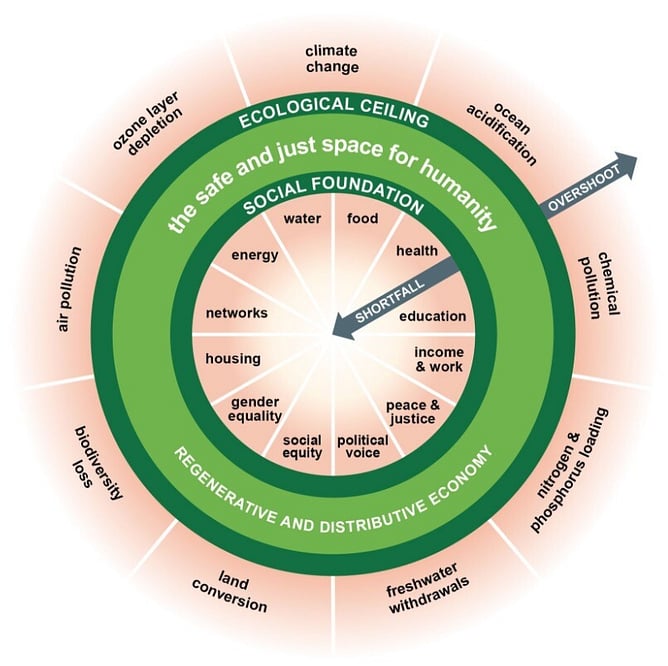
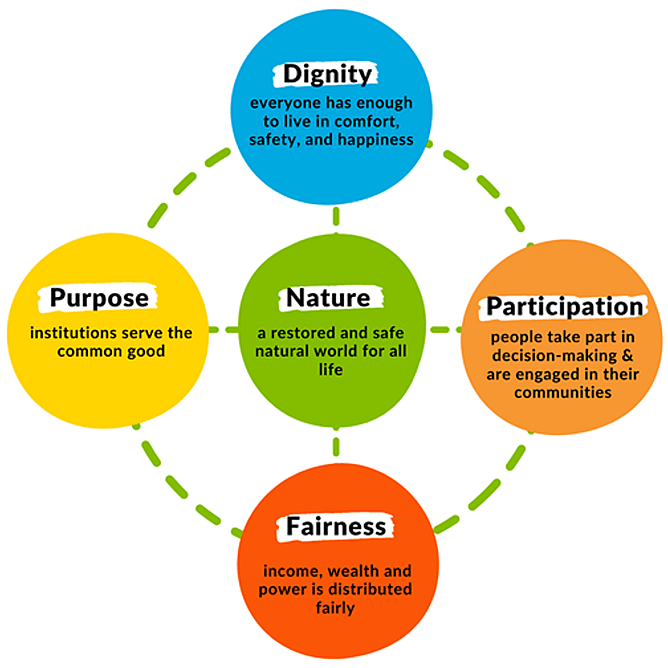
If our economies were grounded in science, we’d be working to an agreed set of planetary boundaries, such as those identified in Doughnut Economics. We’d be measuring the social environmental harm caused by economic activity, and we’d be redesigning our systems to prevent harm. A Wellbeing Economy is one that serves people and planet, rather than the other way around.
Economic growth is regarded as having universal benefits, so we should all want it. There are historical examples of this being true. When investment has been directed into specific areas such as public healthcare, people have benefited (and healthy people stay in their jobs – win win). When investment is directed into private wealth generation, private wealth benefits. These decisions are intentional and not outside of our control.
Humankind is inherently innovative, we can redesign our economic systems, we’ve done it before. It’ll take courage, vulnerability and curiosity from all of us, politicians included.
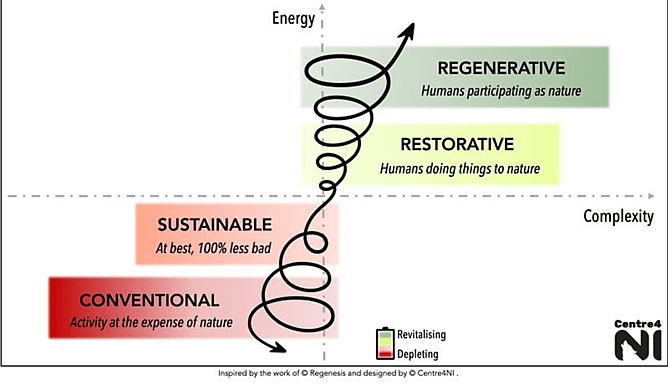
The next time you hear a politician say we can only focus on sustainability when we have strong economic growth. Ask them, what are the essential components of the economy – they might respond with capital, but you could respond with energy (or soil, or water). Ask them, growth of what and for who? They might talk about a trickle-down effect, where wealth creation by the one percenter’s (those with all the money) slowly makes it down to those without. You could respond with the increasing inequity in Aotearoa specifically the growing number of children living in material hardship. Or you might ask about intergenerational economics, making decisions now that ensure future generations can thrive in a natural environment that can sustain them. Ask them to be curious about what a new system that served all could look like.
Our economies rely on physics and natural resources from healthy ecosystems and abundant biodiversity. However, our current systems are based on philosophies from a different time that don’t value or measure any of these vital components.
Let’s have courage to challenge these philosophies to redesign the systems that contribute to our well-being now, and that of future generations.